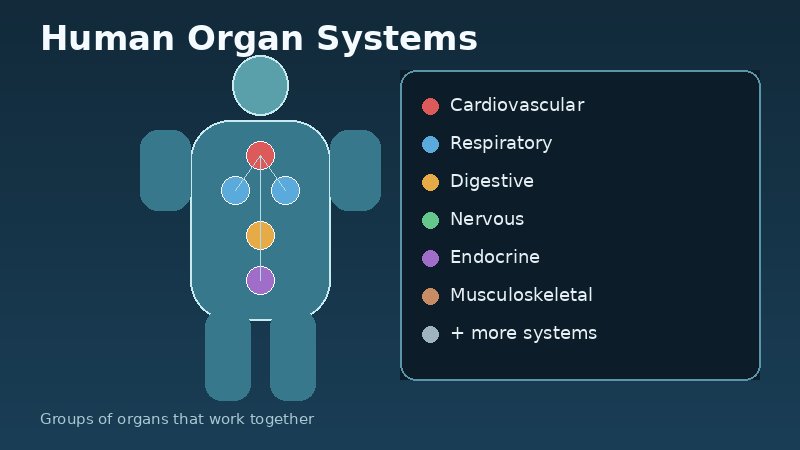
The human body is organized into organ systems—groups of organs that work together to perform major functions such as circulation, breathing, digestion, movement, and hormone signaling. Commonly described systems include the cardiovascular, respiratory, nervous, integumentary (skin), musculoskeletal, digestive, endocrine, urinary, and reproductive systems (male and female).
Many organs contribute to more than one system, and the systems constantly communicate so the body can maintain stable internal conditions (homeostasis).
Source: Organ Systems — Merck Manual Consumer Version (reviewed Feb 2025).