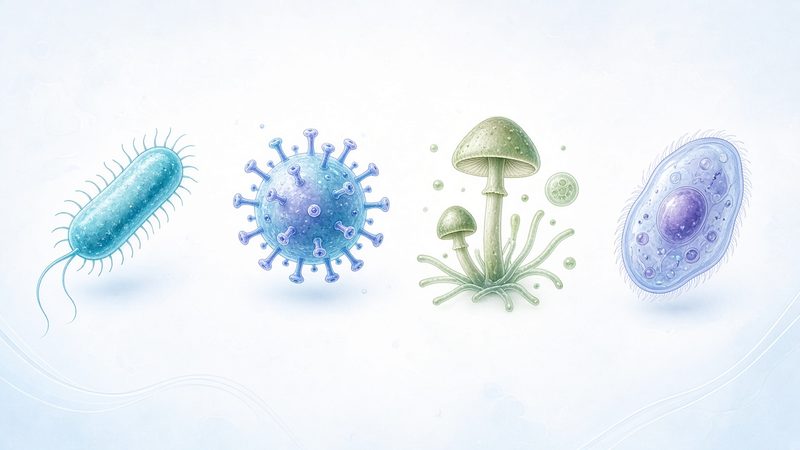
Infectious diseases are illnesses caused by harmful germs, or pathogens, that enter the body from outside. Clinicians commonly group them by the kind of pathogen involved: viral, bacterial, fungal, and parasitic infections, with prion diseases as a rare additional category.
Viruses are genetic material in a protective shell; bacteria are single-celled organisms; fungi include yeasts and molds that can overgrow or invade tissue; and parasites live on or in a host. Prion diseases are caused by misfolded proteins rather than living microbes and are extremely uncommon.
Source: Cleveland Clinic — Infectious Diseases: Types, Causes & Treatments (medically reviewed; last updated May 16, 2025).