Blood has three main functions: transportation, defense, and maintenance of homeostasis. It carries oxygen and nutrients to body cells, delivers hormones to their target tissues, and removes wastes such as carbon dioxide, which it takes to the lungs to be exhaled.
For defense, white blood cells fight bacteria, viruses, and abnormal cells, while platelets and plasma proteins form clots that stop bleeding. To maintain homeostasis, blood distributes heat to help regulate body temperature, buffers the pH of body tissues (normally about 7.35 to 7.45), and helps regulate the water content of cells.
Source: OpenStax Anatomy and Physiology 2e: An Overview of Blood
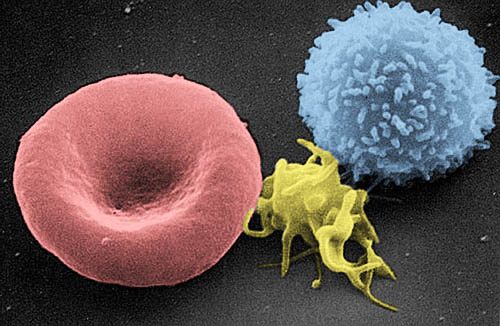
Image: Scanning electron micrograph of human red blood cells, a platelet, and a white blood cell, Electron Microscopy Facility at NCI-Frederick, public domain, via Wikimedia Commons.