
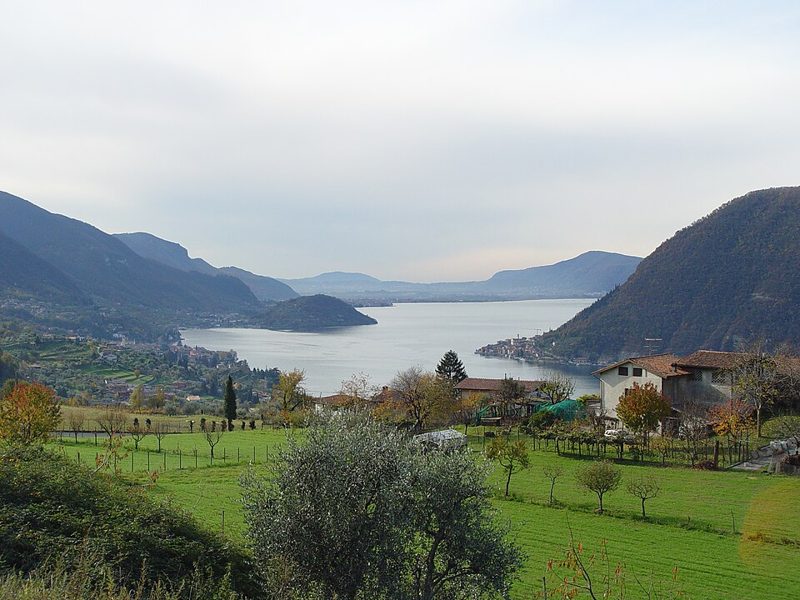
The medieval tsunamis on Lake Iseo in northern Italy were caused by earthquakes in 1117 and 1222 that collapsed the underwater front of the Oglio River delta, a front that centuries of farming-driven erosion had made steep and overloaded.
A study published in Nature Communications in October 2026, led by Muhammad Naveed Zafar with researchers including Pierre Sabatier of the University Savoie Mont Blanc and mathematician Denys Dutykh, found that forest clearing, farming and grazing in Val Camonica since Roman times tripled the sediment reaching the lake. The 1117 collapse moved about 62 million cubic meters of sediment, and the 1222 collapse about 10 million. Simulations suggest the 1117 wave reached nearby shores within a minute, climbed about 50 meters there, and rose about 5.5 meters at the town of Iseo. A 12th-century manuscript in the Vatican Library records that very few villagers near the lakes escaped. Eight centuries of erosion have since rebuilt the delta, so the researchers say the hazard has returned for today’s densely built shores.
Image: Lake Iseo, Lombardy, Franco Folini, CC BY-SA 2.0, via Wikimedia Commons.