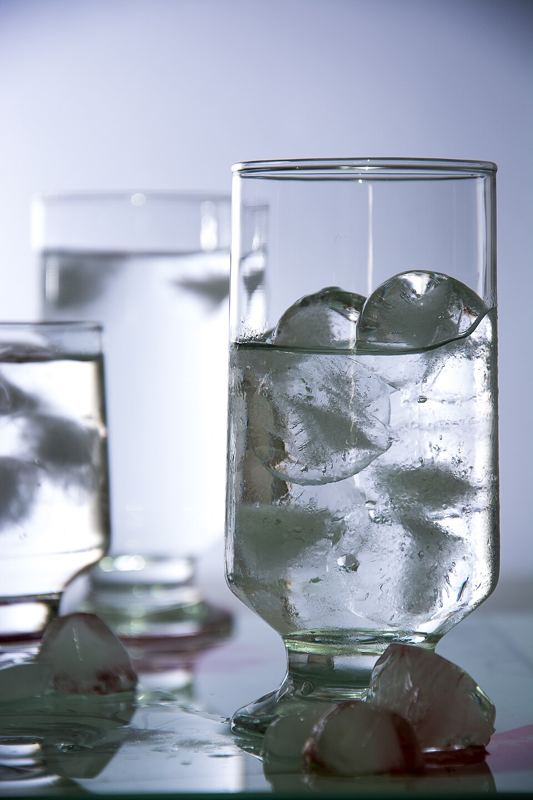
A freezing point is the temperature at which a liquid turns into a solid. For pure water at normal sea-level pressure, that is 0 °C (32 °F). Each pure substance has its own freezing point, and for most pure substances it is the same temperature as the melting point.
Several things can shift it. Changing the pressure moves the freezing point, and dissolving something in a liquid lowers it, which is why salted water freezes below 0 °C. Mixtures such as fats tend to freeze over a range of temperatures rather than at one point. A very pure liquid can also be supercooled below its freezing point without forming crystals, until a seed crystal or disturbance starts the freezing.
Source: Encyclopaedia Britannica: Freezing point
Image: Ice cubes on water, by Cleiton Andrade Andrade, CC0, via Wikimedia Commons.