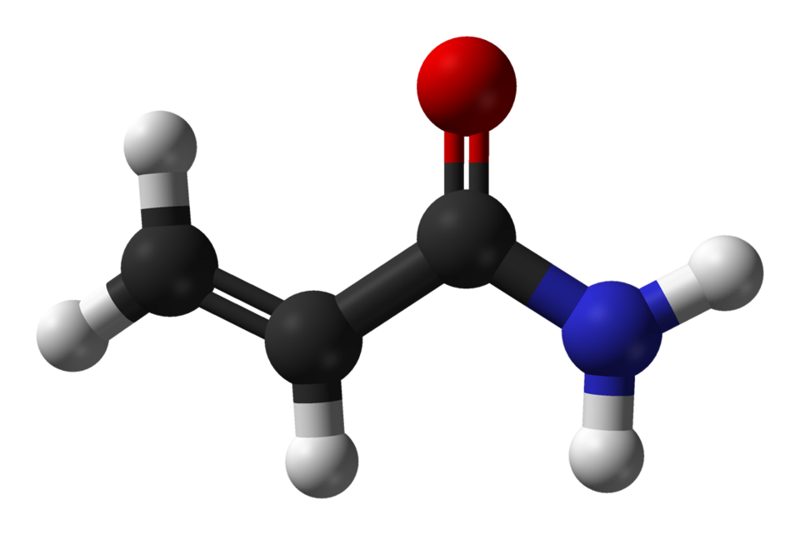
Acrylamide is a chemical used mainly to make polyacrylamide and related polymers, which are used in producing paper, dyes, and plastics and in treating drinking water and wastewater. It also forms naturally in some starchy foods, such as potatoes, when they are cooked at high temperatures, and it is a component of tobacco smoke. According to the National Cancer Institute, food and cigarette smoke are the main sources of exposure for most people.
At high doses, acrylamide is a nerve toxin: heavy workplace exposure (through breathing it in) has caused neurological damage in workers. The U.S. National Toxicology Program considers it “reasonably anticipated to be a human carcinogen” based on animal studies, although large human studies have not found consistent evidence that acrylamide in the diet raises cancer risk. The chemical was in the news in October 2026 after prosecutors in Wyoming alleged that a University of Wyoming graduate student put acrylamide in a colleague’s tea; those charges are allegations only.
Source: National Cancer Institute, “Acrylamide and Cancer Risk”.
Image: Ball-and-stick model of the acrylamide molecule. Credit: Ben Mills, public domain, via Wikimedia Commons.