Crude oil is the unrefined liquid petroleum pumped from underground. It is a fossil fuel: a mixture of hydrocarbons that formed over millions of years from the remains of tiny marine plants and animals (such as diatoms) that were buried under layers of sand, silt, and rock, where heat and pressure turned them into oil. The word petroleum means rock oil or oil from the earth.
Crude oil sits in liquid or gaseous form in underground reservoirs, in tiny spaces within sedimentary rock, and near the surface in tar (oil) sands. After it is extracted, it goes to a refinery, where it is separated into usable petroleum products such as gasoline, diesel fuel, heating oil, and jet fuel. According to the U.S. Energy Information Administration, a 42-gallon barrel of crude oil yields about 45 gallons of petroleum products in U.S. refineries because of refinery processing gain.
Source: U.S. Energy Information Administration: Oil and petroleum products explained
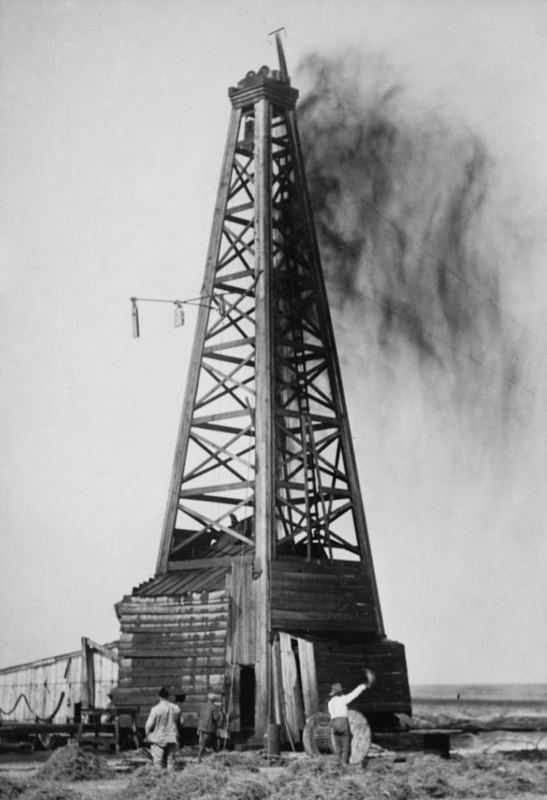
Image: Oil well gusher at Okemah, Oklahoma, 1922, public domain (U.S. National Archives), via Wikimedia Commons.