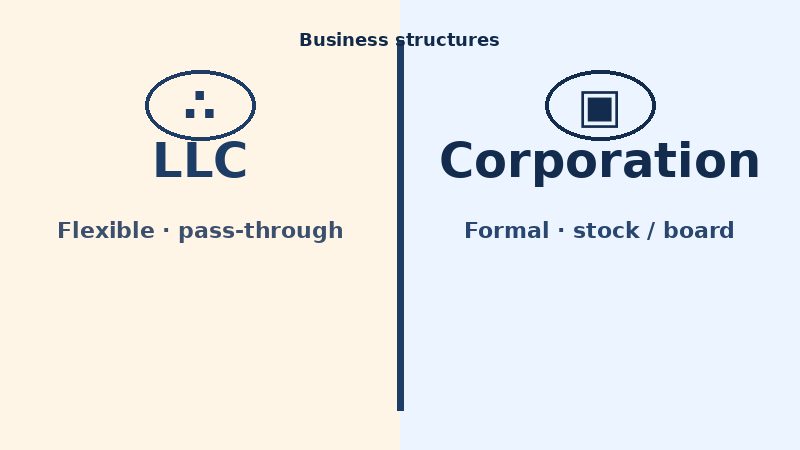
Both a corporation and a limited liability company (LLC) are state-registered business entities that generally protect owners’ personal assets from most business debts and lawsuits. The practical differences are structure, formality, and default tax treatment.
An LLC is typically more flexible: owners (members) can manage the company themselves or appoint managers, and profits and losses usually pass through to owners’ personal returns without a separate corporate income tax (members are generally treated as self-employed for Social Security and Medicare). A corporation (often a C corp) is a separate legal person with shareholders, a board of directors, and officers; it usually requires more record-keeping and reporting, and by default pays corporate tax on profits—with a possible second tax when dividends go to shareholders.
Corporations also tend to be easier for raising capital by selling stock and continuing when ownership changes; LLCs are often preferred for owner-managed businesses that want liability protection with fewer corporate formalities. Rules vary by state, and either form may elect different IRS tax treatments in some cases.
Source: Choose a business structure — U.S. Small Business Administration (SBA)