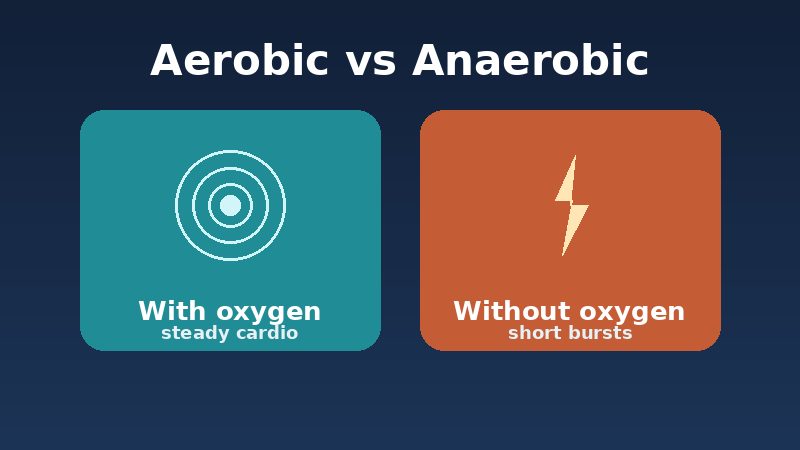
Aerobic exercise means “with oxygen”: sustained, rhythmic activity that raises your heart rate while your muscles use oxygen to make energy (examples include brisk walking, cycling, and swimming). Anaerobic exercise means “without oxygen”: short, high-intensity efforts where muscles rely on energy systems that do not primarily use oxygen in the moment (examples include heavy weightlifting and all-out sprints).
Cleveland Clinic notes that the labels describe how the body produces energy during the activity—continuous cardio that keeps oxygen delivery matched to demand versus quick bursts where demand briefly outpaces aerobic supply—so both styles can belong in a balanced fitness routine.