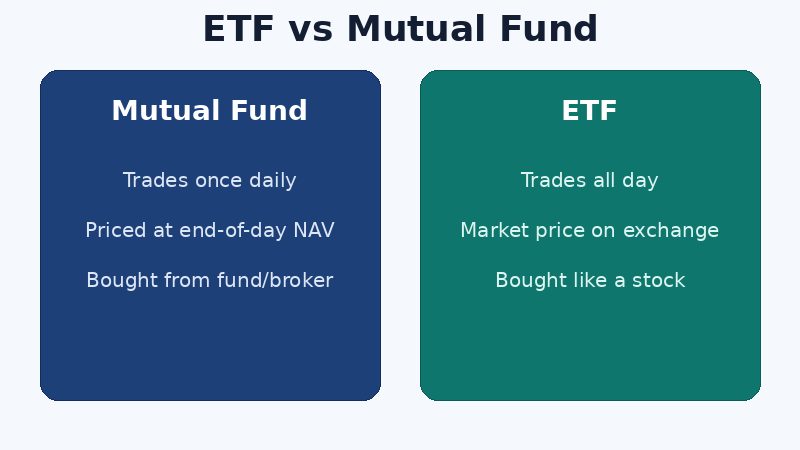
Both ETFs (exchange-traded funds) and mutual funds pool investors’ money into diversified portfolios, but they trade and price differently. Mutual fund orders are executed once per day at the fund’s end-of-day net asset value (NAV). ETF shares trade on an exchange throughout the trading day at fluctuating market prices, much like stocks.
ETFs often give investors more control over tax timing and typically disclose holdings more frequently (often daily), while mutual funds usually report holdings quarterly. Mutual funds may require a minimum investment; an ETF’s entry cost is generally the price of a share (or fractional share). Both charge expense ratios and can lose money—read the prospectus before investing.
Source: ETFs vs. Mutual Funds: Similarities and Differences — FINRA