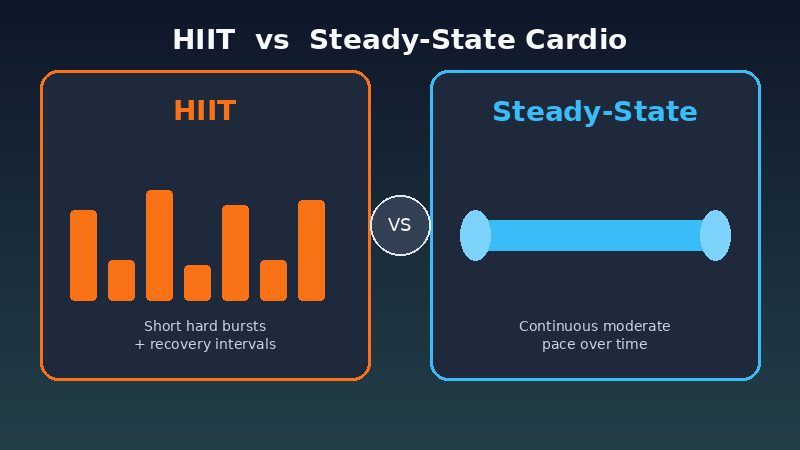
HIIT (high-intensity interval training) alternates short bursts of hard effort with recovery periods. Steady-state cardio, often called moderate-intensity continuous training (MICT), keeps a fairly even, moderate pace for a longer continuous bout. Both improve aerobic fitness, but they stress the body differently and suit different schedules.
Research summarized by the American Council on Exercise notes that HIIT is often more time-efficient for gains in cardiorespiratory fitness, while continuous moderate work supports other cardiometabolic outcomes. Physical-activity guidelines commonly cite about 150 minutes of moderate-intensity exercise, 75 minutes of vigorous exercise, or a mix of both each week.
Rather than treating the two as rivals, ACE authors emphasize combining HIIT and MICT so you get unique benefits from each and can adjust sessions when time is limited.
Source: HIIT vs. Moderate-intensity Continuous Training: Which One is Superior? — ACE