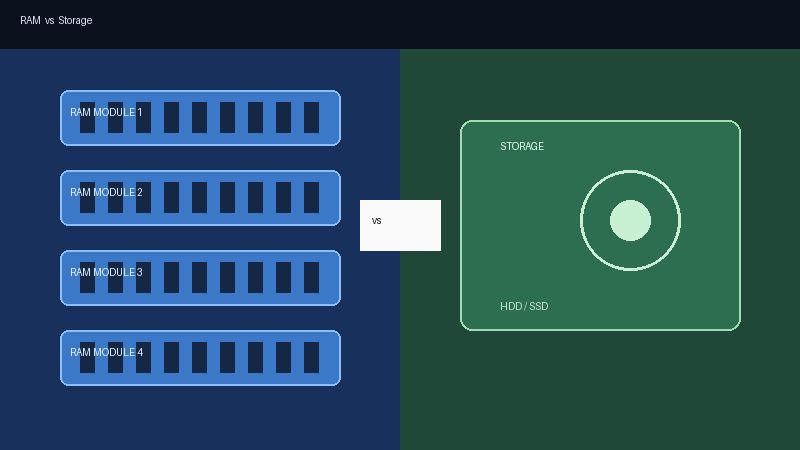
RAM (random-access memory) is a computer’s short-term working memory: it temporarily holds the data the processor needs for open apps and files, and that data is cleared when you close programs or shut the machine down. Storage—whether a hard disk drive (HDD) or solid-state drive (SSD)—is long-term memory that keeps the operating system, applications, and saved files even after power is off.
RAM is much faster than storage but usually far smaller in capacity, which is why your computer loads active work into RAM instead of reading everything from the disk each time. If you need more room for photos, documents, or games, you upgrade storage; if apps feel slow or freeze when many are open, you often need more RAM. (Intel)