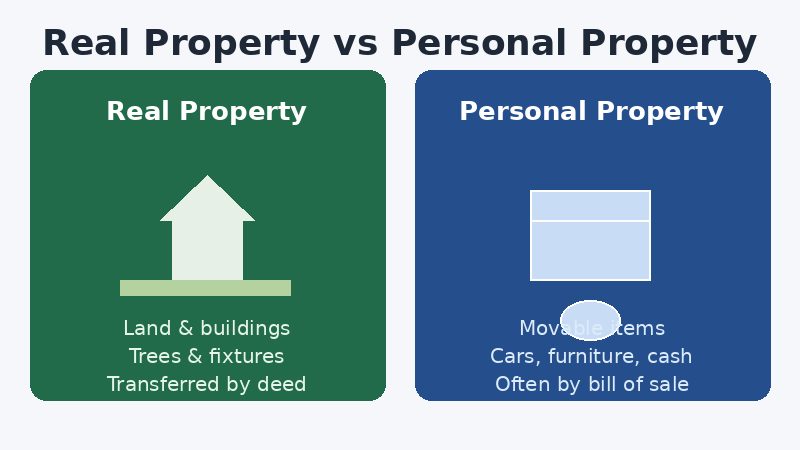
In U.S. property law, real property is land and things permanently attached to it—such as buildings, trees, and mineral deposits—while personal property covers movable or intangible assets that are not classified as real property (for example furniture, vehicles, or a bank account).
That distinction matters for how ownership is transferred and regulated: real property is typically conveyed by deed and recorded under state land rules, whereas personal property is often transferred by bill of sale or similar proof of ownership. Items that start as personal property can become part of real property if they are permanently annexed as fixtures.
Source: Cornell Law School Legal Information Institute — Real property (Wex).