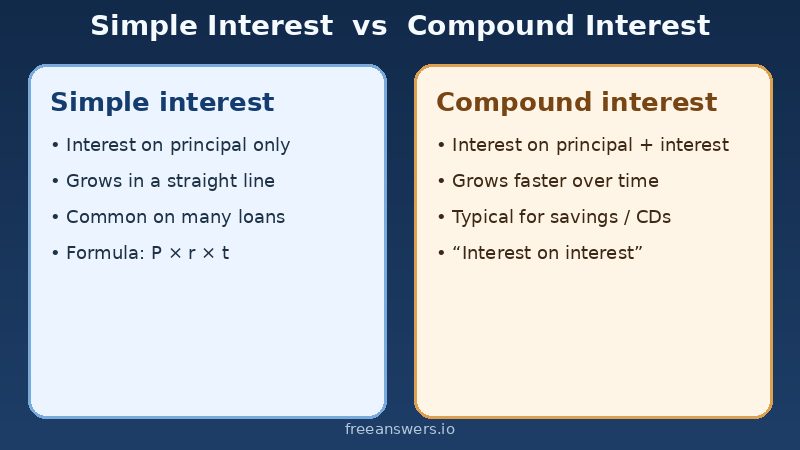
Simple interest is calculated only on the original principal, so the interest amount stays the same each period and grows in a straight line (formula: principal × rate × time). Compound interest is calculated on the principal plus interest already earned—“interest on interest”—so balances grow faster as compounding periods accumulate.
Many consumer loans (such as typical car loans or mortgages) use simple interest, while savings accounts, CDs, and many investment products use compounding. For borrowers, simple interest usually means a lower total cost; for savers and investors, compounding generally produces a larger balance over the same rate and term.