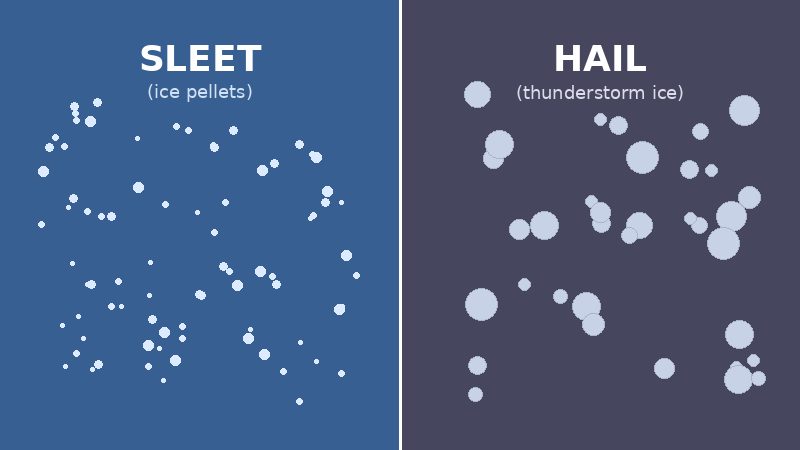
Sleet (also called ice pellets) forms in winter when snow partially melts in a shallow warm layer aloft, then refreezes in a deep layer of below-freezing air near the ground. The result is small, translucent ice pellets that usually bounce when they hit a hard surface.
Hail is ice that grows inside thunderstorms, where strong updrafts loft raindrops into very cold air so layers of ice can build—sometimes into stones much larger than sleet. Hail is a warm-season thunderstorm hazard, not the same process that makes winter sleet.
Source: Severe Weather 101: Winter Weather Types — NOAA NSSL (hail contrasted as thunderstorm ice in NOAA/NSSL education materials).