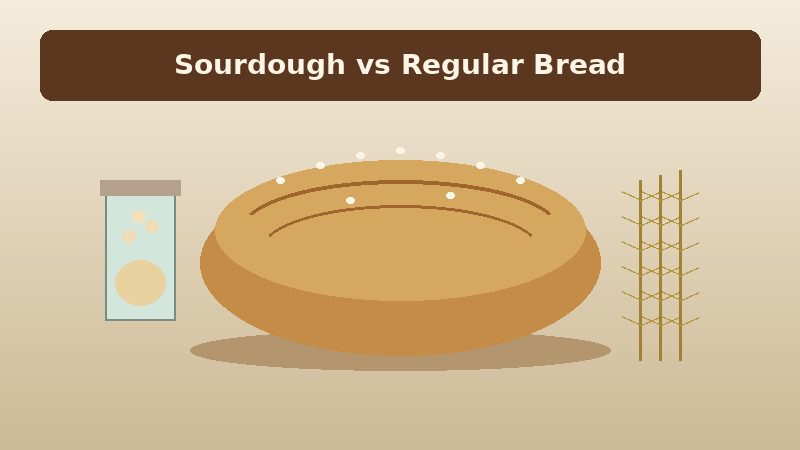
Regular bread is usually leavened with a single strain of commercial baker’s yeast (Saccharomyces cerevisiae), which rises quickly and consistently but produces a relatively simple flavor. Traditional sourdough instead uses a starter—a living culture of wild yeasts and lactic acid bacteria that ferment flour and water over a much longer time.
Those bacteria make organic acids (including lactic and acetic acid) that lower the dough’s pH, giving sourdough its tangy taste, longer shelf life, and the longer fermentation profile that distinguishes it from yeast-only bread. Not every loaf labeled “sourdough” is made this way; ingredient lists that include baker’s yeast or added vinegar may not reflect traditional wild-culture fermentation.
Source: Understanding and Selecting Sourdough for Health Benefits — Colorado State University Extension