
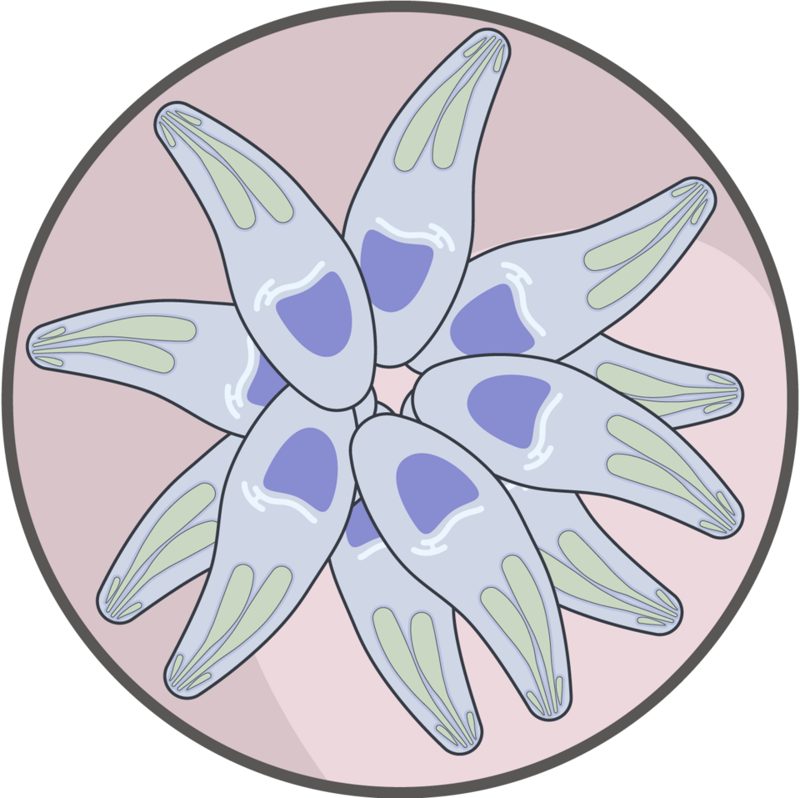
Toxoplasma gondii needs a protein called DDP (DIX-DnaJ domain-containing protein) to reproduce; a Virginia Tech-led study reported in October 2026 that when DDP was switched off, the parasites stopped multiplying entirely.
The team, led by parasitologist Raj Gaji of the Virginia-Maryland College of Veterinary Medicine, published the work in the journal mBio. Toxoplasma reproduces by building two daughter parasites inside itself, starting with a scaffold called the inner membrane complex. DDP helps deliver materials from the parasite’s Golgi to those developing daughters. Without it, the parasites could still copy their genetic material but could not build the framework for their offspring, and restoring the protein restored reproduction. Human cells have proteins with one of DDP’s two building blocks but never both together, which makes it a promising drug target that could spare the patient’s own cells. About one-third of the world’s population carries the parasite. It is usually dormant, but it can reawaken in people with weakened immunity, and no vaccine exists.
Image: Toxoplasma gondii tachyzoites, NIH NIAID / Ryan Kissinger, public domain, via Wikimedia Commons.