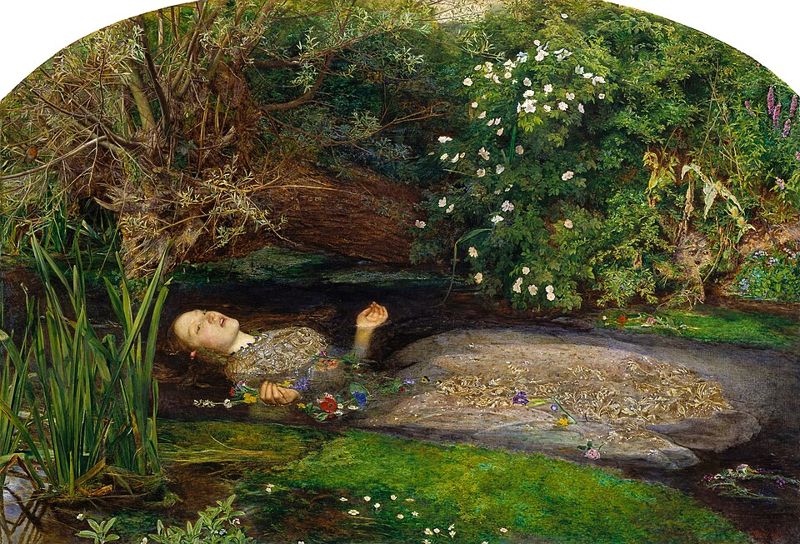
The Pre-Raphaelites were a group of young British artists and one writer who formed a secret society in London in 1848. They opposed the Royal Academy’s emphasis on idealized art modeled after the Renaissance master Raphael, and they rejected the light genre painting popular at the time.
Inspired by critic John Ruskin’s call to “go to nature,” they aimed for serious subjects painted with intense, detailed realism. Early themes were often religious or drawn from literature and poetry about love and death; they also addressed modern social problems. The principal members of the Pre-Raphaelite Brotherhood were William Holman Hunt, John Everett Millais, and Dante Gabriel Rossetti. After early criticism the movement became highly influential, with a second phase from about 1860 that contributed to Symbolism.
Source: Tate, Art Term: Pre-Raphaelite
Image: John Everett Millais, Ophelia (1851–52), public domain, via Wikimedia Commons.