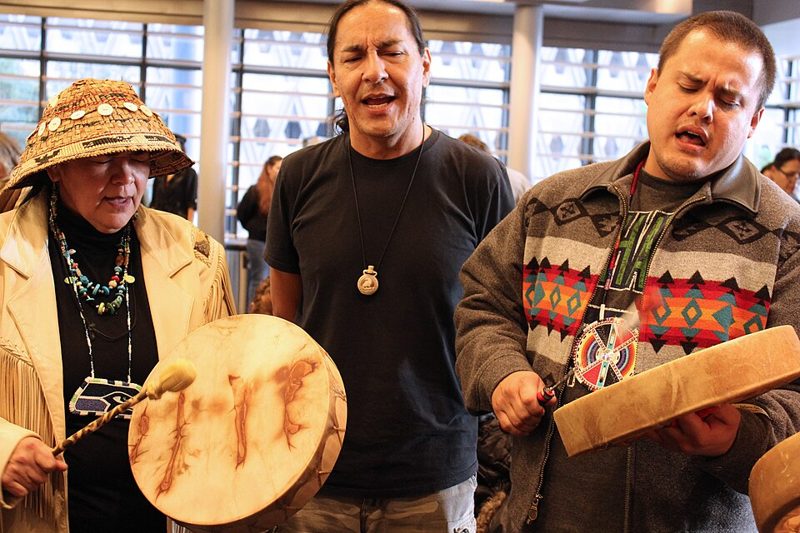
Because many Indigenous activists and their supporters object to a holiday that celebrates Christopher Columbus. His 1492 arrival opened the Americas to European colonization, which brought devastating losses of life and land to Native peoples, and Columbus and his crew kidnapped and enslaved people they encountered. Indigenous Peoples’ Day, held on the same second Monday of October (October 12 in 2026), instead honors Native Americans, Alaska Natives, and Native Hawaiians, their contributions to American history and culture, and their rights and sovereignty.
The idea was first proposed in 1977 at a United Nations NGO conference on discrimination against Indigenous populations in the Americas. South Dakota became the first state to replace Columbus Day, with Native Americans’ Day in 1990, and Berkeley, California, became the first city to adopt Indigenous Peoples’ Day in 1992. In 2021 Joe Biden became the first U.S. president to officially recognize the holiday, and many states and cities now observe it either instead of or alongside Columbus Day.
Source: Encyclopædia Britannica, “Indigenous Peoples’ Day”.
Image: Indigenous Peoples’ Day performers at Seattle City Hall, 2014, by Seattle Municipal Archives (CC BY 2.0), via Wikimedia Commons.