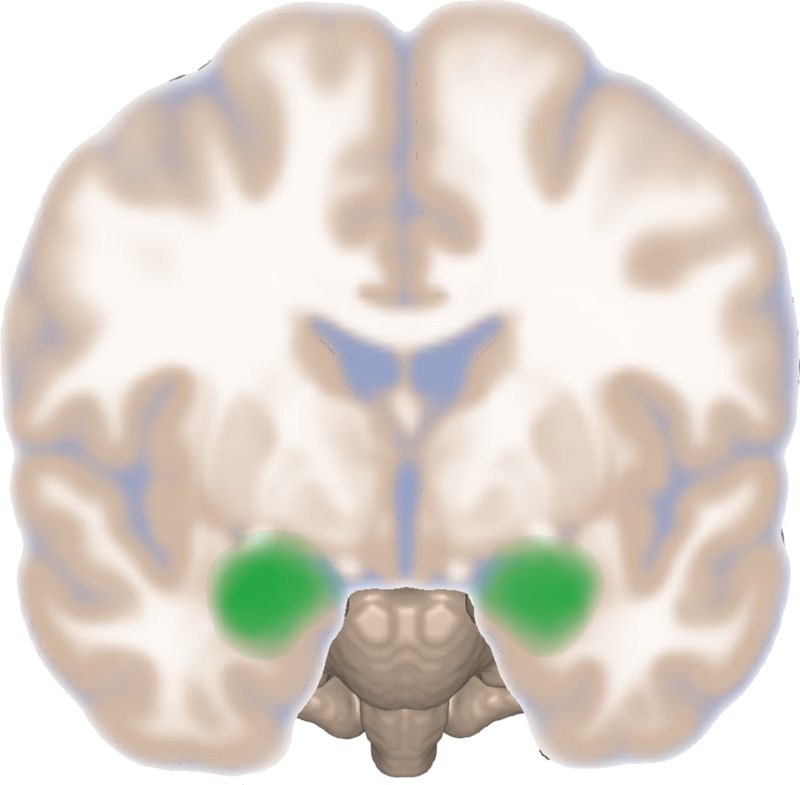
A Northwestern University study in mice, published in Nature Communications in October 2026, points to a small group of somatostatin neurons in the central amygdala, a brain region that processes fear and stress. Mice given a synthetic cannabinoid (a lab drug that acts like THC) froze more often and avoided a fox-urine predator scent, and that heightened fear tracked with these neurons becoming more active.
The researchers found that the drug weakens the brain’s natural “brake” on those neurons, and that higher doses combined with a stressful situation released the brake further. When the neurons were genetically silenced, the drugged mice no longer avoided the scent as much. The work was done in mice, so it suggests a mechanism for why a high can turn anxious in people but does not prove it in humans.
Source: Northwestern Medicine News Center — Study reveals brain cells that drive anxiety after cannabinoid exposure; study: Yasmin et al., Nature Communications (2026)
Image: Frontal view of the human brain with the amygdala highlighted. Credit: Daniel Sabinasz, CC BY-SA 4.0, via Wikimedia Commons.