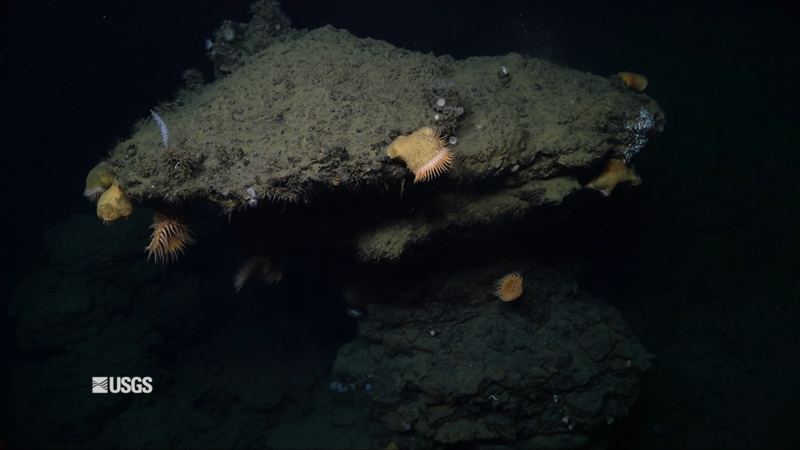
The rocks were metal sulfide samples that USGS scientists collected in 2022 from Escanaba Trough, a hydrothermal vent area on the seafloor off the Oregon–California border. Two of the 57 samples heated themselves past 100 °C and burned while being freeze-dried and crushed in the lab. The culprit was nanocrystalline marcasite, an unstable form of iron sulfide that had replaced an earlier mineral, pyrrhotite: once exposed to oxygen in air, it oxidizes in a reaction that releases heat, and crushing and drying supply extra energy, so the heat builds until the rock combusts. The study, published in Scientific Reports, flags this as a safety hazard to plan for if deep-sea sulfide deposits are ever mined.
Image: Seafloor massive sulfide deposit. U.S. Geological Survey, public domain.