
Last updated: October 25, 2026
REAL ID requirements are simple at their core: to get a REAL ID, you must prove your full legal name, date of birth, Social Security number, principal address (two proofs) and lawful status at your state DMV. Since May 7, 2025, you need a REAL ID or another TSA-accepted ID, such as a passport, to board domestic flights.
Every rule below comes from the Department of Homeland Security (DHS) and the Transportation Security Administration (TSA).
Contents
- What is a REAL ID?
- What documents do you need for a REAL ID?
- REAL ID documents checklist
- What does a REAL ID look like?
- REAL ID requirements to fly
- IDs you can use instead of a REAL ID
- REAL ID requirements under 18
- What if you do not have a REAL ID at the airport?
- When you do not need a REAL ID
- Frequently asked questions
What is a REAL ID?
A REAL ID is a state driver’s license or identification card issued under federal minimum security standards. Congress passed the REAL ID Act in 2005 to carry out a 9/11 Commission recommendation that the federal government “set standards for the issuance of sources of identification, such as driver’s licenses” (DHS REAL ID FAQs).
The law sets rules for how states verify applicants and produce cards, and it stops federal agencies from accepting noncompliant licenses for three purposes: accessing certain federal facilities, boarding federally regulated commercial aircraft, and entering nuclear power plants. DHS says all 50 states, the District of Columbia and the five territories now issue REAL ID-compliant cards.
What documents do you need for a REAL ID?
DHS sets the floor, and your state can add to it. According to the DHS REAL ID frequently asked questions, at a minimum you must provide documentation showing:
- Full legal name
- Date of birth
- Social Security number
- Two proofs of address of principal residence
- Lawful status in the United States
States may add requirements, so check your state DMV website before you go.
Do you still need your Social Security card?
Not always. The REAL ID Modernization Act of December 2020 removed the federal requirement for a Social Security document, so states may simply collect the number on the application. Some states still require a document, and all must verify the number with the Social Security Administration.
If your state does require a document and you cannot find your Social Security card, DHS lists these accepted substitutes: a W-2 form, an SSA-1099 form, a non-SSA-1099 form, or a pay stub showing your name and Social Security number.
REAL ID documents checklist
The table below pairs each federal requirement with documents DHS names for it. Your state’s published list is the final word.
| Requirement | Commonly accepted documents |
|---|---|
| Full legal name and date of birth | An identity document your state accepts; DHS treats a valid U.S. passport or a permanent resident card as identity and lawful status documents |
| Social Security number | Social Security card, W-2, SSA-1099, non-SSA-1099, or pay stub with your name and number |
| Proof of address | Two documents showing your principal residence address, from your state’s accepted list |
| Lawful status | U.S. passport for citizens; permanent resident card or employment authorization document (I-766) for many noncitizens |
What does a REAL ID look like?
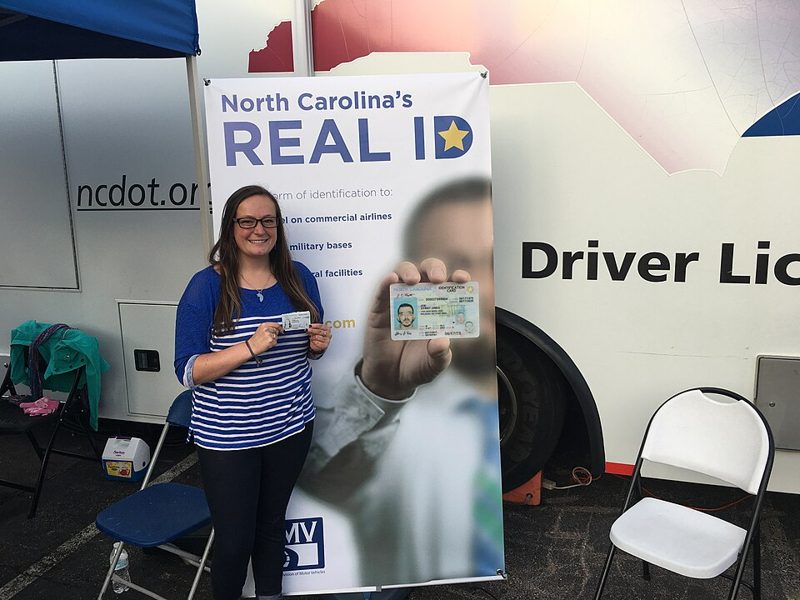
DHS says REAL ID-compliant cards carry a marking on the upper portion of the card, usually a star. If your card has no such marking, it is not REAL ID-compliant and will not be accepted at airport security. TSA’s REAL ID readiness tool puts it simply: if your license has a star, a flag, or says “Enhanced,” you are ready.
Enhanced driver’s licenses (EDLs) and enhanced ID cards are issued by only five states: Michigan, Minnesota, New York, Vermont and Washington. They show a U.S. flag and the word Enhanced instead of a star and are fully accepted.
REAL ID requirements to fly
TSA began REAL ID enforcement on May 7, 2025. Since then, state licenses and IDs that are not REAL ID-compliant are no longer accepted at airport checkpoints (TSA acceptable identification list). Adults 18 and older must show valid identification to travel.
TSA currently accepts listed IDs up to two years after they expire, but a temporary driver’s license is not acceptable, so bring a passport or another listed ID if your new card has not arrived.
IDs you can use instead of a REAL ID
A REAL ID is only one option. TSA’s list of acceptable identification includes, among others:
- U.S. passport or U.S. passport card
- State-issued enhanced driver’s license or enhanced ID card
- DHS trusted traveler cards: Global Entry, NEXUS, SENTRI and FAST
- U.S. Department of Defense ID, including IDs issued to dependents
- Permanent resident card, border crossing card, or foreign passport
- Tribal photo IDs, Employment Authorization Card (I-766) and Veteran Health Identification Card
- Approved mobile driver’s licenses, if based on a REAL ID or enhanced license
For more detail on two of the most common substitutes, see whether you can use a passport instead of a REAL ID and whether a passport card is valid for air travel. If you are relying on a passport, check how long a U.S. passport is valid before you book.
REAL ID requirements under 18
Children do not need a REAL ID to fly. TSA does not require travelers under 18 to show identification on flights within the United States. Contact the airline about its own rules for minors.
One exception: unaccompanied minors who are eligible for TSA PreCheck must show an acceptable ID to get expedited screening. For timing on that program, see how long TSA PreCheck approval takes and the difference between TSA PreCheck and Global Entry.
What if you do not have a REAL ID at the airport?
Since February 1, 2026, travelers without a REAL ID or other acceptable ID can pay a $45 fee to use TSA ConfirmID. TSA will then attempt to verify your identity so you can go through security, but it says there is no guarantee it can do so (TSA ConfirmID).
- Pay the $45 fee in advance on Pay.gov (the only accepted method) using the traveler’s legal name and travel start date.
- Save the confirmation email, or print or screenshot the receipt.
- Show the receipt to a TSA officer at the checkpoint to begin identity verification.
The payment covers 10 days from the travel date on the receipt, and each adult without an acceptable ID must pay separately.
When you do not need a REAL ID
DHS is clear that the REAL ID Act does not require identification where none was required before, such as the public areas of the Smithsonian, and it covers only federal facilities, commercial flights and nuclear power plants.
DHS also says a REAL ID cannot be used to cross into Canada or Mexico, for other international travel, or for international cruises. For trips abroad you still need a passport or another border-crossing document, though some U.S. territories are different; see whether U.S. citizens need a passport to go to Puerto Rico.
Frequently asked questions
What documents do I need for a REAL ID?
At a minimum, DHS says you must document your full legal name, date of birth, Social Security number, two proofs of address of principal residence, and lawful status. Your state may ask for more, so check its DMV website first.
What does a REAL ID look like?
Most REAL ID cards have a star marking in the upper portion of the card. Enhanced driver’s licenses instead show a U.S. flag and the word Enhanced, and they are also accepted.
Do I need a REAL ID if I have a passport?
No. A valid U.S. passport or passport card is accepted at TSA checkpoints in place of a REAL ID for domestic flights. You only need one acceptable ID, not both.
Do kids need a REAL ID to fly?
No. TSA does not require children under 18 to show identification on flights within the United States, although airlines may set their own rules for minors.
What happens if I don’t have a REAL ID at the airport?
Without a REAL ID or another acceptable ID, you can pay a $45 TSA ConfirmID fee, and TSA will try to verify your identity. TSA says verification is not guaranteed, and you may miss your flight if it fails.
Sources
- Department of Homeland Security: REAL ID Frequently Asked Questions
- Transportation Security Administration: REAL ID
- TSA: Acceptable Identification at the TSA Checkpoint
- TSA: TSA ConfirmID
Image: “The NCDMV Gets Real at the 150th N.C. State Fair,” by NCDOTcommunications, licensed under CC BY 2.0, via Wikimedia Commons. Resized.
