Did the FDA approve the first drug to treat Alexander disease?
Yes. In September 2026 the U.S. Food and Drug Administration approved Zanvastro, the first and only disease-modifying treatment for Alexander disease — a rare, progressive neurological disorder that can impair motor, cognitive, and autonomic function. Until this approval, care was limited to managing symptoms. The drug grew out of more than 30 years of research … Read more
Can cerebral palsy be caused by birth?

Yes. Cerebral palsy can result from brain injury around the time of birth, including complications that cut off oxygen or blood flow to the baby—for example placental abruption, uterine rupture, or umbilical-cord problems. That said, most cerebral palsy is congenital (linked to events before or during birth), and many cases stem from factors such as … Read more

Did Maynooth University researchers create a DNA computer that performs 100-bit calculations without electricity?

Abstract illustration of a DNA double helix representing molecular computing

Yes. Researchers at Maynooth University in Ireland described a Scaffolded DNA Computer (SDC) in Nature on September 16, 2026, that uses self-assembling DNA strands in water and salt to run programmed calculations without continuous electricity—only heat to start the reactions. The system executed 10 molecular programs, including multiplication, division, and addition of 25-bit numbers (a … Read more

Did NASA award SpaceX $946 million for three more ISS crew missions?

Yes. On September 18, 2026, NASA modified its Commercial Crew Transportation Capability (CCtCap) contract to award SpaceX an additional $946 million for three more crewed missions to the International Space Station, covering performance through 2030. The change brings SpaceX’s total CCtCap missions to 17 and the contract’s total value to about $5.92 billion. SpaceX has … Read more

Did Stanford researchers observe the first real-time quantum jump in sound?

Yes. On September 17, 2026, Stanford physicists led by Amir Safavi-Naeini reported the first direct, real-time observation of quantum jumps of sound—sudden energy-state changes by phonons—in a mechanical resonator, in results published in the journal Science. Quantum jumps had previously been seen in trapped ions (1986) and in photons (2007), but watching individual phonons jump … Read more

Did the FDA approve the first gene therapy for Sanfilippo syndrome type A?

Yes. On September 17, 2026, the U.S. Food and Drug Administration approved Fayuvi (rebisufligene etisparvovec-hopf), the first FDA-approved treatment for pediatric patients with mucopolysaccharidosis type IIIA (MPS IIIA), also called Sanfilippo syndrome type A. Fayuvi is a one-time intravenous AAV9 gene therapy that delivers a working copy of the SGSH gene so cells can make … Read more

Did Stanford researchers create a virtual biotech with 37,000 AI agents for drug discovery?

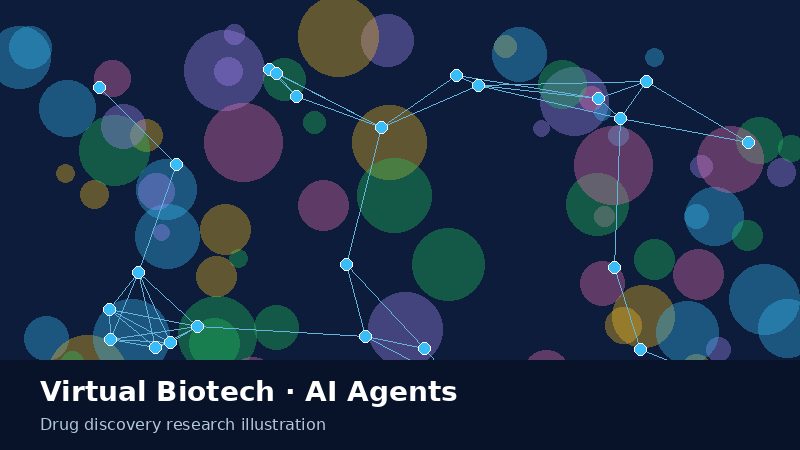
Yes. Stanford Medicine researchers led by James Zou and Harrison Zhang described a “Virtual Biotech” in Science (published Sept. 17, 2026): a multi-agent AI system with tens of thousands of specialized agents—about 37,000 in one clinical-trial curation task—organized like a biotech company under a virtual chief scientific officer. The agents analyzed tens of thousands of … Read more

What adaptations do sea turtles have for ocean life?

Sea turtle swimming in the ocean

Sea turtles are marine reptiles with streamlined bodies and large paddle-like flippers that make them well adapted to life in the ocean. Unlike land turtles, they cannot pull their heads and flippers into their shells; their rear flippers act as rudders for steering while they swim. Species also show feeding adaptations—for example, hawksbills use sharp … Read more

What is the EU’s first commercial-scale CO₂ storage project?

Offshore carbon capture and storage represented by the Greensand project in Denmark

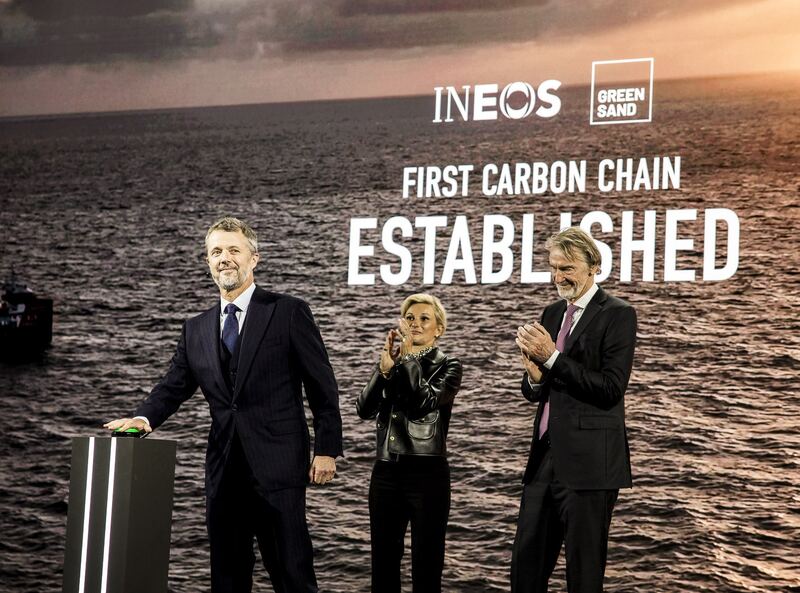
Denmark’s Greensand project is the European Union’s first commercial-scale CO₂ storage project, officially opened at Esbjerg on September 18, 2026. It is also the EU’s first fully integrated chain for capturing, transporting and storing CO₂: liquid CO₂ is shipped to the Danish North Sea and injected about 1,800 meters beneath the seabed into depleted oil … Read more