About 15 times per second, or roughly every 60 milliseconds, according to a study of macaque monkeys posted on October 16, 2026, by researchers at UC Berkeley and Princeton led by Janis Hesse and Doris Tsao. The monkeys were shown two different faces at once, one to each eye, so that only one face was consciously seen while the other was suppressed from awareness.
Using Neuropixels probes in face-processing areas of the inferotemporal cortex and in the prefrontal cortex, the team found that even while the monkey’s perception stayed steady, the same neurons rapidly alternated between brief states that represented only the seen face and brief states that represented only the unseen face. Each state carried enough information to reconstruct its face from the neural activity. The findings are a preprint on bioRxiv and have not yet been peer reviewed.
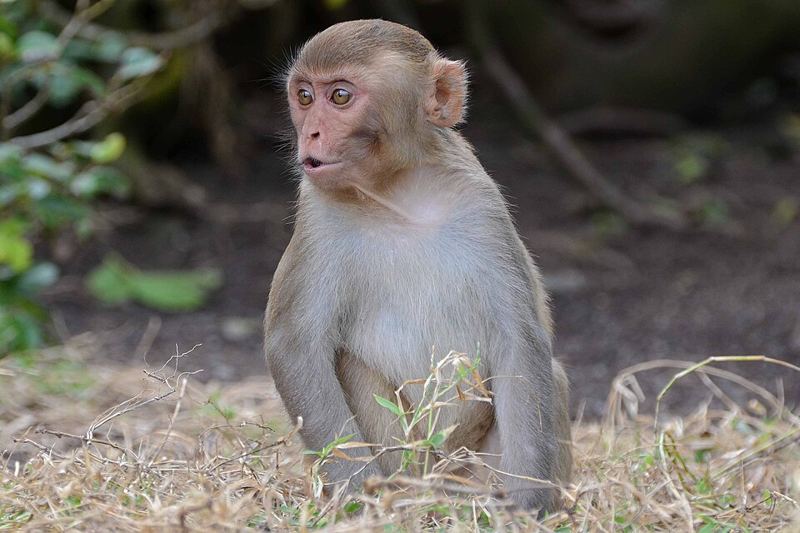
Image: Juvenile rhesus macaque, Puerto Rico, by Geoff Gallice, CC BY 2.0, via Wikimedia Commons.