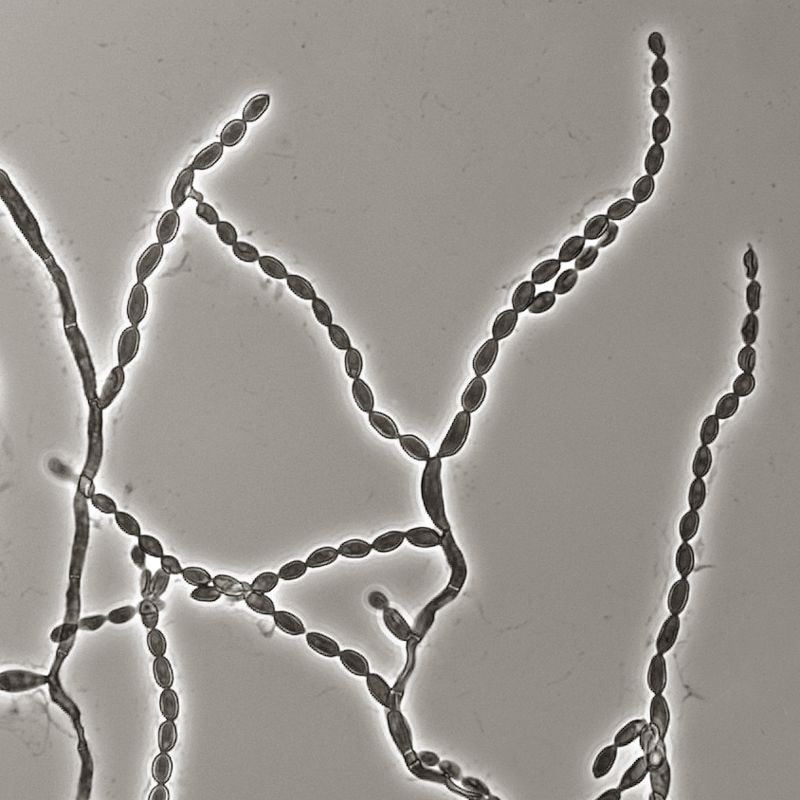
Cladophialophora bantiana is a rare, dark-pigmented (dematiaceous) mold that tends to infect the brain, usually causing brain abscesses. According to the CDC, infection carries a 60%–70% case-fatality rate even with aggressive treatment, and about half of patients have no prior immune-weakening condition. Its environmental source and how people become infected are still not fully understood.
Detections do appear to be rising. A CDC report published October 2, 2026, found that a University of Washington reference laboratory identified 48 confirmed cases and one probable case from January 2009 through July 1, 2026, with one to five cases a year through 2023, then eight in 2024 and 14 in 2025. The detection rate rose from an average of 8.4 to 26 per 1,000 brain and spinal cord specimens tested, so the increase is not explained by more testing alone. The cause of the rise is unknown, and the infection remains rare overall.
Image: Slide culture of Cladophialophora bantiana (UAMH 10767) under phase contrast microscopy. Credit: Medmyco, CC BY-SA 4.0, via Wikimedia Commons.