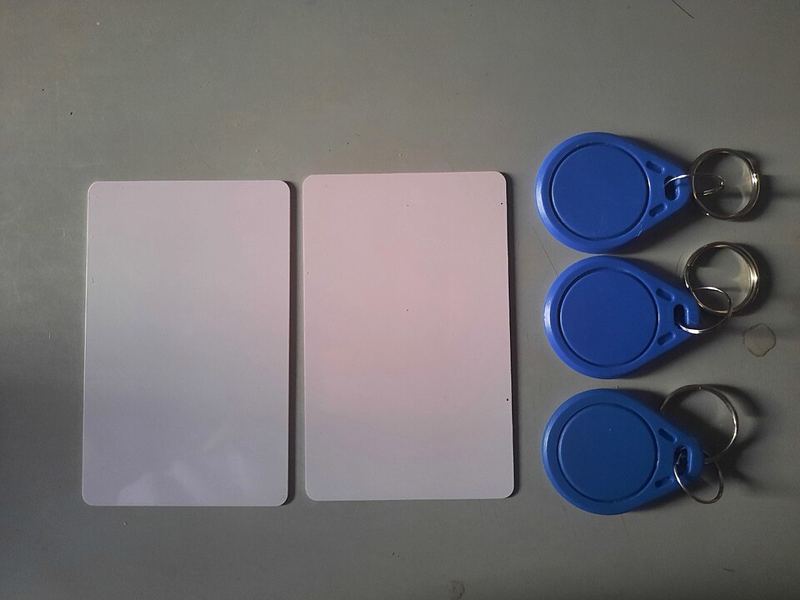
NFC (near-field communication) is a type of RFID (radio-frequency identification), so all NFC is RFID, but not all RFID is NFC. RFID is the umbrella term for tags that send data by radio and spans several bands: low frequency (125–134 kHz, common in hotel key cards), high frequency (13.56 MHz, used for contactless credit cards and tickets) and ultra-high frequency (856–960 MHz, also called RAIN RFID, used for inventory and asset tracking). NFC operates only at 13.56 MHz and is designed to work within a few centimeters, which is why you tap a phone for Apple Pay or Google Pay, while RFID tags are often read from a few meters away. In practice, UHF RFID suits scanning many items at a distance, and NFC suits single, deliberate exchanges such as payments, ID badges and door access.
Source: GS1 US, “RFID vs. NFC: What’s the Difference?”
Image: 13.56 MHz RFID cards and key fobs (photo: Anonymous Agent, CC BY-SA 4.0), via Wikimedia Commons.