
RPE (rating of perceived exertion) rates how hard a set feels on a 1-to-10 scale, while RIR (repetitions in reserve) counts how many more reps you could have done before reaching failure; in strength training the two are usually combined, so each RPE score is defined by an RIR estimate.
On the resistance-training RPE scale published by Zourdos and colleagues in 2016, an RPE of 10 means 0 RIR, a true maximal effort, and lower scores mean more reps left in reserve. Scores from 5 to 10 use RIR descriptors, with 5 and 6 grouped as 4 to 6 reps in reserve because lifters find a range easier to judge when several reps remain, while scores from 1 to 4 describe general effort instead. Traditional RPE comes from Gunnar Borg’s 6-to-20 scale, built mainly for aerobic exercise, and his later 1-to-10 CR10 scale. An RIR-based scale first appeared in The Reactive Training Systems Manual in 2008 for powerlifting. Research cited in the review found that lifters estimate their remaining reps more accurately as a set gets closer to failure, which makes high RPE ratings the most reliable.
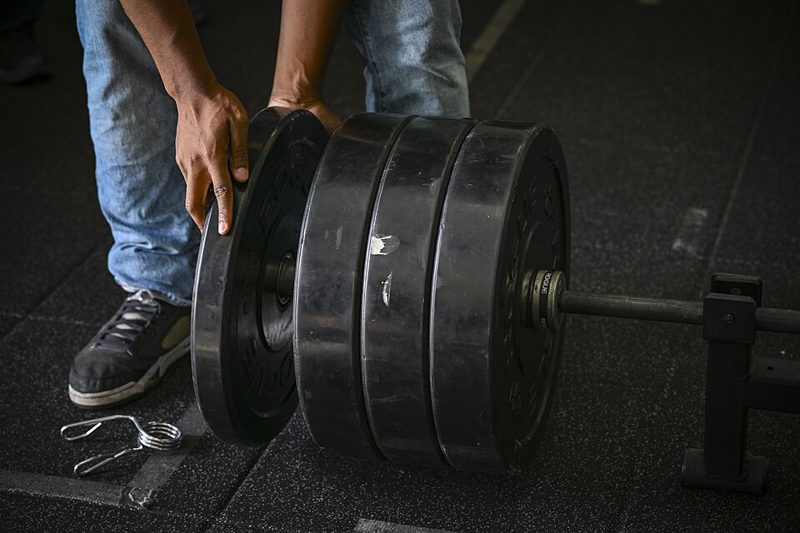
Image: Skelton Gym Powerlifting Competition, U.S. Air Force photo by Senior Airman Haiden Morris, public domain, via Wikimedia Commons.