
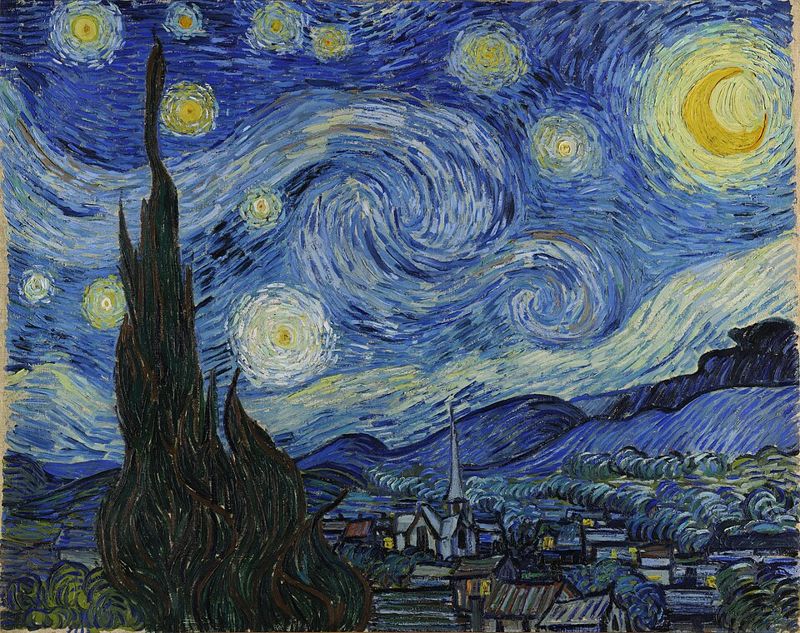
A new study says Van Gogh’s The Starry Night most closely matches the real predawn sky over Saint-Rémy-de-Provence, France, around July 22, 1889, about a month later than the June 1889 date art historians have long accepted.
The South Korean team, led by Elijah Jeong-hyun Kim of Kyung Hee University, published the findings in Scientific Reports on October 22, 2026. Around that July date, the moon before dawn looked like the crescent in the painting, and the Hyades star cluster in Taurus was rising in the east alongside Venus. In mid-June 1889, by contrast, the moon was not a thin crescent. Weather analyses suggest the sky was clear enough for Van Gogh to see the scene from his asylum, and his letters mentioning cicadas also point to the hotter month. The team tested its method on other paintings, including Café Terrace at Night. Outside experts call the July date an intriguing hypothesis rather than a settled answer, since Van Gogh painted from sketches and memory and the sky may combine several nights.
Image: The Starry Night by Vincent van Gogh (1889), public domain, via Wikimedia Commons.