
Last updated: November 15, 2026
W2 vs 1099 comes down to how a worker is classified. A W-2 employee has income, Social Security and Medicare taxes withheld, and the employer pays half of those payroll taxes. A 1099 independent contractor is paid without withholding and pays the full 15.3% self-employment tax plus estimated income tax.
This guide compares W-2 and 1099 work side by side, explains the IRS test for employee vs. contractor status, shows the tax difference with an example, and lists the 2026 thresholds that matter.
Contents
- W2 vs 1099 comparison chart
- How does the IRS decide W-2 employee vs. 1099 contractor?
- W2 vs 1099 taxes: who pays what?
- How much more tax does a 1099 contractor pay?
- Which is better for the employee, W-2 or 1099?
- What employers must do for W-2 and 1099 workers
- Frequently asked questions
W2 vs 1099 comparison chart
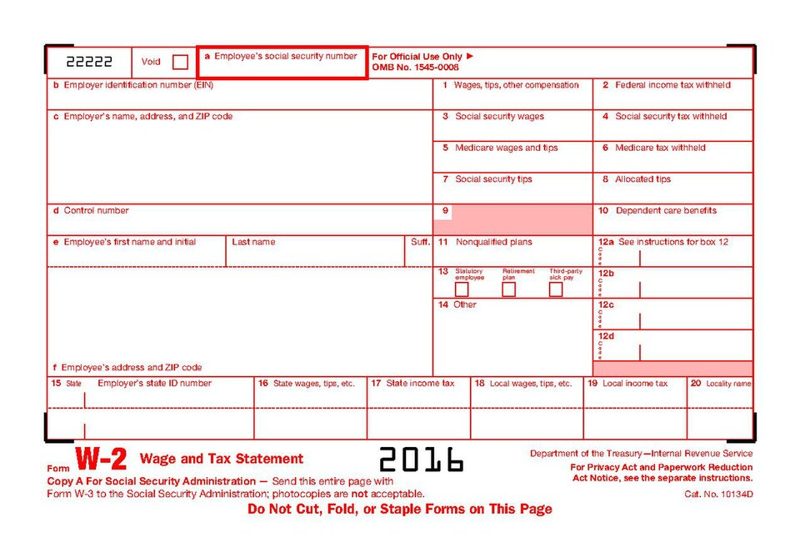
Form W-2 is the Wage and Tax Statement for employees. Form 1099-NEC reports nonemployee compensation paid to independent contractors (IRS).
| Feature | W-2 employee | 1099 contractor |
|---|---|---|
| Who controls the work | Employer controls what is done and how | Payer controls only the result |
| Income tax withholding | Withheld from each paycheck | Generally none; worker pays estimated tax |
| Social Security and Medicare | 7.65% from the worker, 7.65% from the employer | 15.3% self-employment tax paid by the worker |
| Unemployment tax | Paid by the employer | Not paid by the payer |
| Year-end form | Form W-2 | Form 1099-NEC if paid $2,000 or more (2026) |
| Employer-type benefits | Often offered (pension, insurance, vacation pay) | Usually none |
How does the IRS decide W-2 employee vs. 1099 contractor?
The job title and the contract label do not decide the question. The IRS looks at the degree of control and independence in the whole relationship, using three categories of common-law evidence (IRS):
- Behavioral control: Does the company control, or have the right to control, what the worker does and how the work is done?
- Financial control: Does the payer control the business side of the job, such as how the worker is paid, whether expenses are reimbursed and who provides tools and supplies?
- Type of relationship: Are there written contracts or employee-type benefits such as a pension plan, insurance or vacation pay? Is the relationship ongoing, and is the work a key part of the business?
No single factor settles it. A remote worker is still an employee if the business can control what will be done and how. If status is unclear, either the business or the worker can file Form SS-8 and ask the IRS to decide; a determination can take at least six months (IRS).
W2 vs 1099 taxes: who pays what?
W-2 employee taxes
Employers withhold income, Social Security and Medicare taxes from employee wages and pay a matching employer share of Social Security and Medicare (IRS). The combined rate is 15.3% (12.4% Social Security and 2.9% Medicare), so each side pays 7.65% (IRS). Unlike the self-employed, wage earners cannot deduct their share. To see how withholding turns gross pay into take-home pay, read the difference between gross and net income.
1099 contractor taxes
Self-employed workers pay self-employment tax of 15.3%: 12.4% for Social Security and 2.9% for Medicare. It applies when net earnings from self-employment are $400 or more and is figured on Schedule SE (IRS). Key 2026 rules:
- The Social Security part applies to the first $184,500 of combined wages, tips and net self-employment earnings.
- An additional 0.9% Medicare tax applies above $200,000 for single filers and $250,000 for married couples filing jointly.
- You can deduct the employer-equivalent portion of your self-employment tax when figuring adjusted gross income.
Because nothing is withheld, contractors generally must make estimated tax payments if they expect to owe $1,000 or more when they file. Most people avoid the underpayment penalty by paying at least 90% of this year’s tax or 100% of last year’s, whichever is smaller (IRS).
How much more tax does a 1099 contractor pay?
Here is a simplified example that looks only at Social Security and Medicare tax on $60,000 of pay. It ignores income tax and business expenses.
- W-2 employee: $60,000 × 7.65% = $4,590 withheld from the worker. The employer pays another $4,590.
- 1099 contractor: At the full 15.3% rate, $60,000 × 15.3% = $9,180, all paid by the contractor.
- Difference: Up to $4,590 more in payroll-type tax for the contractor on the same gross amount.
- Offsets: The contractor can deduct the employer-equivalent portion of self-employment tax when figuring adjusted gross income (IRS).
To work with these rates yourself, see how to calculate a percentage. Your actual tax depends on your full return, so treat this as an illustration rather than tax advice.
Which is better for the employee, W-2 or 1099?
Neither is better for everyone. Compare offers on total value, not just the rate:
- W-2 advantages: automatic withholding, the employer pays half of payroll taxes and unemployment tax, and employer benefits such as a retirement match. See how a 401(k) match true-up works.
- 1099 advantages: more control over how, when and for whom you work, plus deductions for ordinary business expenses on Schedule C.
- Rule of thumb for comparing offers: a 1099 rate needs to be noticeably higher than a W-2 wage to cover the extra 7.65% of payroll tax, benefits you would buy yourself and unpaid time off.
Contractors who grow a business may later form an entity. Our explainers on corporations vs. LLCs and S corporation shareholder limits cover the basics.
What employers must do for W-2 and 1099 workers
For employees, a business generally must withhold and deposit income, Social Security and Medicare taxes, pay the matching employer share and pay unemployment tax. For independent contractors, it generally does not withhold or pay those taxes (IRS). For contractors, the IRS steps are:
- Have the contractor complete Form W-9 to get their name and taxpayer identification number, and keep it for four years (IRS).
- Withhold 24% backup withholding if the contractor does not provide a TIN as required (IRS).
- File Form 1099-NEC for payments of $2,000 or more made after 2025, by January 31 (the next business day when it falls on a weekend) (IRS).
Treating an employee as a contractor without a reasonable basis can make the business liable for that worker’s employment taxes (IRS).
Frequently asked questions
What is the difference between W-2 and 1099?
A W-2 reports wages paid to an employee, with income, Social Security and Medicare taxes already withheld. A 1099-NEC reports payments to an independent contractor, who usually has no tax withheld and pays self-employment tax instead.
Do you pay more taxes on 1099 or W-2?
For the same pay, a 1099 contractor usually pays more Social Security and Medicare tax: 15.3% self-employment tax versus 7.65% withheld from a W-2 employee. Contractors can deduct the employer-equivalent half of that tax and business expenses, which narrows the gap.
Is it better to be W-2 or 1099?
It depends on your priorities. W-2 work usually brings withholding, a shared payroll tax bill and employer benefits, while 1099 work gives more control over how and when you work but leaves taxes, benefits and expenses to you.
Can you be both W-2 and 1099?
Yes. You can have a W-2 job and 1099 side work in the same year. Your W-2 wages count toward the $184,500 Social Security wage base for 2026, which can reduce the Social Security part of your self-employment tax.
Do 1099 contractors have to pay quarterly taxes?
Generally yes, if they expect to owe $1,000 or more in tax when they file. The IRS lets you pay estimated tax quarterly, or more often, using Form 1040-ES.
What is the 1099 threshold for 2026?
For payments made after December 31, 2025, the reporting threshold for Form 1099-NEC nonemployee compensation rose from $600 to $2,000. The IRS says it may be adjusted for inflation starting in 2027.
Featured image: Form W-2 (2016 revision), U.S. Internal Revenue Service, public domain, via Wikimedia Commons.
Sources
- IRS. Independent contractor (self-employed) or employee?
- IRS. Self-employment tax (Social Security and Medicare taxes).
- IRS. Forms and associated taxes for independent contractors.
- IRS. Instructions for Forms 1099-MISC and 1099-NEC.
- IRS. Estimated taxes.
1 thought on “W2 vs 1099: Differences, Taxes and Comparison Chart for Workers”